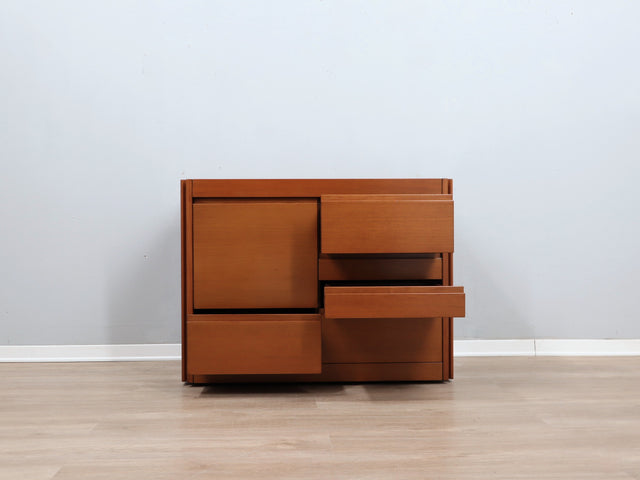
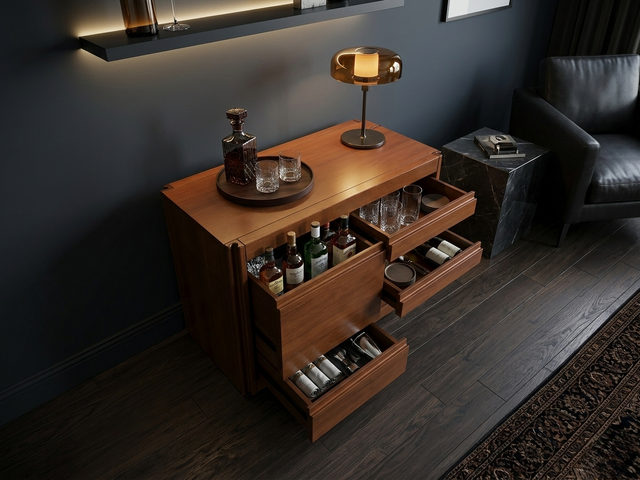
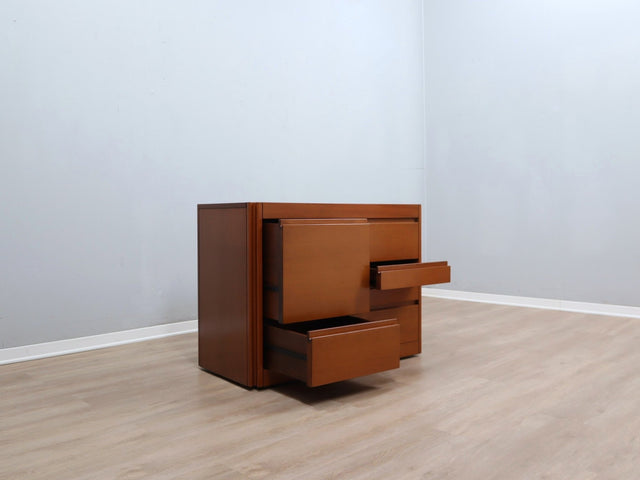
1970s Italian walnut Angelo Mangiarotti 4D series cabinet bar
Materials & Engineering: A masterpiece of 1970s Italian functionalism, this 4D Series cabinet by Angelo Mangiarotti features expert interlocking joinery (no nails or screws). Crafted in premium solid walnut, it includes specialized internal compartments for spirits and glassware, ensuring both durability and technical elegance.
Versatility: This architectural unit is a perfect space-saving bar or a double-sided room divider. Its clean silhouette fits seamlessly into a Parisian pied-à-terre, a Berlin loft, or a New York City penthouse, offering high-capacity multilevel storage without compromising on minimalist aesthetics.
Styling & Sourcing Authentic Design 🔍 Where to buy vintage design in London or NYC? no problem we ships these rare Italian icons globally. How to style a Mangiarotti cabinet? Pair its geometric walnut grain with modern lighting to create a focal point in any Amsterdam or Milan inspired interior.
W.95 / D.48 / H.72 (cm)
--
SOLD
Looking for a product that is no longer available? Ask us!
We can search for it for you!
Discover the Essence of IlRestaurato
At IlRestaurato, every piece tells a story of timeless elegance and authentic craftsmanship. Our passion lies in breathing new life into unique objects, combining tradition with contemporary design. Each product is carefully restored and curated to preserve its original charm while adding a modern touch, making it a one-of-a-kind treasure for your space.
Experience the beauty of heritage reimagined, where artistry and sustainability come together to create something truly extraordinary.
Every item from Il Restaurato is more than just decor—it’s a journey through time. Lovingly restored by skilled artisans, our pieces carry the soul of their past while being perfectly suited for modern living. By choosing Il Restaurato, you’re not just adding beauty to your home; you’re embracing a story, preserving heritage, and making a sustainable choice.
Let your space reflect your unique taste with timeless creations that blend history and style effortlessly.